


The Best City to Live in Nigeria

Nigeria is a country of cities — vibrant, fast-growing and full of opportunity. Choosing the best city to live in depends on what you value: economic opportunity, safety, infrastructure, healthcare, schooling, green spaces, or cost of living. In this post, we:
- Rank and compare the top Nigerian cities to live in (2025)
- Provide practical neighborhood-level tips for movers, expatriates and investors
- Offer cost-of-living, safety and population context using up-to-date sources
- Explain why EVEREST PROPERTY FINDER is the best listing platform for estate agents, developers and companies who want visibility across Africa
Throughout this guide you’ll find authoritative references, practical advice and clear next steps — whether you’re an estate agent looking to list, a developer seeking buyers, or a family hunting the perfect neighbourhood.
Quick snapshot — what makes a city “the best”?
A city becomes “best” when it balances several core factors:
- Economic opportunity — jobs, business ecosystems and growth sectors
- Safety and security — personal safety, secure neighbourhoods and reliable law enforcement
- Infrastructure — roads, power reliability, public transport and internet access
- Healthcare & Education — quality hospitals, clinics and schools/universities
- Cost of living & affordability — rents, utilities, groceries and lifestyle costs
- Quality of life — green spaces, culture, dining, entertainment and community
- Real estate liquidity — active property markets, transparent listings and professional agents
We evaluate Nigerian cities against these metrics using recent population, cost-of-living and economic data to provide an evidence-based recommendation. Where possible, we cite authoritative sources for the most important facts. (World Population Review)
The contenders — 7 Nigerian cities you should consider
From megacity bustle to quieter provincial comforts, here are the cities we evaluate in detail:
- Lagos — Nigeria’s commercial powerhouse and the country’s largest metropolis. (World Population Review)
- Abuja — The planned capital, known for quality neighbourhoods and government-related jobs. (World Population Review)
- Port Harcourt — Oil-industry hub with high incomes and unique lifestyle advantages. (World Population Review)
- Ibadan — Large, historically significant city with lower cost of living and proximity to Lagos.
- Enugu — Comfortable climate, growing services sector and lower stress levels.
- Kano — Northern commercial centre with large markets and industrial activity.
- Benin City / Warri / Kaduna (honourable mentions) — Each has strong regional advantages for specific industries.
City-by-city deep dive
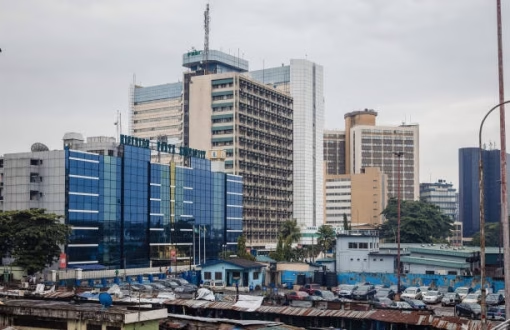
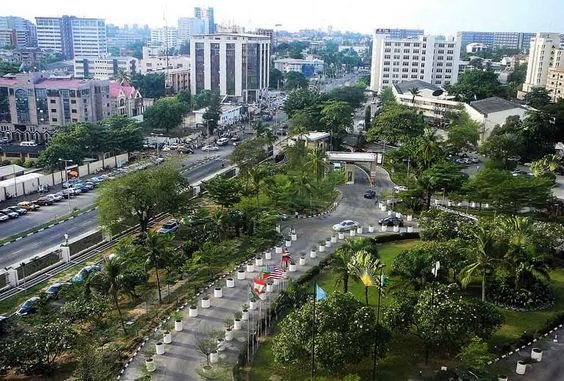
Lagos — the economic engine (best for entrepreneurs, career-driven professionals)
Why people move here: Lagos is Nigeria’s business heart — finance, tech, shipping, media and entertainment converge here. Start-ups scale quickly because of market size and investor attention. A healthy ecosystem of co-working spaces, incubators and fintechs is concentrated in Lagos. (Financial Times)
Population & scale: Lagos is the largest city in Nigeria; recent estimates place its population in the tens of millions — a megacity by any measure. That population density drives market opportunity but also infrastructure pressure. (World Population Review)
Cost of living: Lagos is relatively expensive for Nigeria. Expect higher rents and premium pricing for quality schools and private healthcare. Numbeo’s cost-of-living metrics show elevated monthly costs compared to most Nigerian cities. (Numbeo)
Safety & neighbourhoods: Security varies by neighbourhood. Upscale areas such as Ikoyi, Victoria Island and Lekki often have gated communities and private security; other districts face more day-to-day crime risk. For families and professionals seeking stability, gated estates and managed apartments are common.
Real estate market: High liquidity in premium segments, plenty of new developments (especially in Lekki and the Marina). But infrastructure headaches — traffic congestion, inconsistent power and urban sprawl — complicate daily life. Entrepreneurs and real-estate investors favor Lagos for scale, but buyers must do heavy due diligence. (Financial Times)
Best for: Professionals, fintech/start-up founders, investors, luxury buyers.
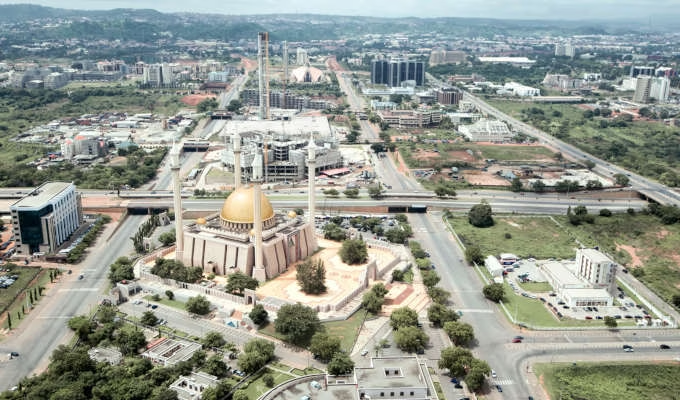
Abuja — the planned capital (best for families, diplomats, public-sector professionals)
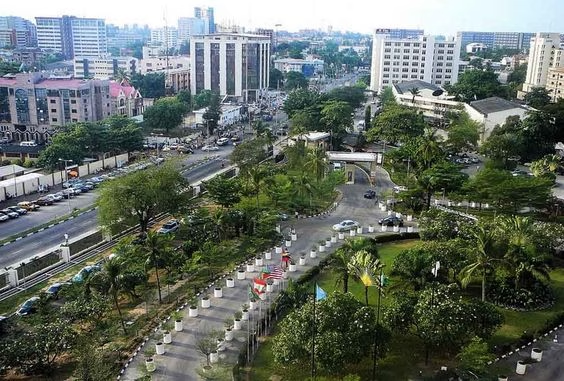
Why people move here: Abuja was planned as the federal capital — it offers broader streets, more regulated neighbourhoods and a higher standard of certain public services compared with many other Nigerian cities. Government jobs, embassies and international organisations make it appealing for expats and diplomats. (World Population Review)
Population & scale: Smaller than Lagos but fast-growing — population estimates show rapid urban expansion. (World Population Review)
Cost of living & lifestyle: Generally similar to Lagos in many costs but with a different urban feel: more green spaces, quieter residential districts (e.g., Maitama, Asokoro, Garki). Numbeo’s cost and safety indices show Abuja as a reasonable trade-off between comfort and affordability for many middle-to-upper income families. (Numbeo)
Safety & neighbourhoods: Many gated communities and estate developments provide strong security. Abuja’s layout supports walking in many neighbourhoods, and international schools and hospitals are concentrated here.
Real estate market: Stable demand for family homes and rental properties near government hubs. Realtors and developers find consistent clients among civil servants and expatriates.
Best for: Families, diplomats, corporate professionals, government workers.
Port Harcourt — the oil city (best for high-earning professionals, industry specialists)
Why people move here: Port Harcourt is the centre of Nigeria’s oil & gas industry. Salaries in the energy sector can be far above national averages, which supports a vibrant real estate market for high earners. (World Population Review)
Population & economy: A mid-sized city with strong industry-specific wealth, Port Harcourt attracts professionals working in oil services, engineering and marine logistics. (World Population Review)
Cost of living & lifestyle: Certain imported goods and housing in secure estates can be expensive, reflecting the high incomes in the sector. At the same time, the city has a unique cultural life and “garden city” feel in parts.
Safety & neighbourhoods: Choose planned estates and company-provided housing for best security. Local knowledge and trusted agents are essential for safe, reliable transactions.
Real estate market: Good rental yields for well-located properties; developers often build housing targeted to company employees.
Best for: Oil & gas professionals and contractors, high-earning specialists.
Ibadan — value and tradition (best for affordability and proximity to Lagos)
Why people move here: Ibadan is large, historically rich and cheaper than Lagos while still providing access to southwestern economic corridors. Many families and retirees appreciate the lower cost of living. Proximity to Lagos makes it an option for people who need occasional access to Lagos markets.
Cost of living & real estate: Rents and property prices are significantly lower than Lagos. For investors seeking value buys or families seeking larger homes for less, Ibadan provides strong affordability.
Best for: Budget-conscious families, investors seeking lower-entry property, retirees.
Enugu, Kano, Benin City — niche strengths
- Enugu: Smoother climate, pleasant living conditions, growing service sector and quieter lifestyle. Best for people valuing calmer pace and reasonably priced real estate.
- Kano: Large market in northern Nigeria with industrial and agricultural trade; cultural and commercial vibrancy.
- Benin City: Regional industrial and commercial hub with good local services.
Comparative metrics — what the data says
Below are a few load-bearing facts and authoritative data points to help you compare cities at a glance:
- Population concentration: Lagos is the largest city in Nigeria and one of Africa’s megacities — the recent population estimate puts Lagos well into the multiple-millions range. Abuja is far smaller, with a population in the low millions, but growing rapidly. (World Population Review)
- Cost-of-living differences: Numbeo shows Lagos and Abuja have higher cost-of-living indices than most other Nigerian cities; Lagos is typically the priciest for rentals and lifestyle. (Numbeo)
- Economic weight: Nigeria’s national economy is large and growing; Lagos is the primary economic engine with significant fintech and start-up activity. The World Bank highlights Nigeria’s GDP scale and macro trends that drive urban migration and investment. (World Bank Open Data)
These data points show how the trade-offs between opportunity and affordability shape each city’s strengths.
Which city is actually the best to live in?
There’s no single “best” city for everyone — but if you want a single, practical recommendation for 2025 based on career opportunity, lifestyle options, healthcare access and real estate liquidity, Lagos takes the lead for many people. Here’s why:
- Unmatched economic opportunity. Lagos houses the most dynamic sectors — fintech, media, ports, commerce — and offers the broadest array of career paths and entrepreneurial opportunity. If you want scale and market access, Lagos is where deals happen. (Financial Times)
- Vibrant neighbourhood options. From luxury gated communities (Ikoyi, Victoria Island, Lekki) to up-and-coming suburbs and established middle-class districts, Lagos has neighbourhoods for many lifestyles — though prices vary dramatically.
- Strong real estate market. Liquidity for well-marketed properties is better in Lagos; international and local buyers actively search here. That helps both agents and developers when they list quality stock.
- Healthcare & education access. The best private hospitals and international schools are concentrated in Lagos and Abuja.
But Lagos comes with trade-offs: congestion, higher living costs, intermittent infrastructure and significant day-to-day hassles. For families or professionals prioritizing calm, green spaces and predictability — Abuja or Enugu may be better fits. For sector-specific earnings (oil & gas), Port Harcourt is unbeatable.
Neighborhood guide: where to live in Lagos (so you make the right choice)
If Lagos is the recommended city for many, these neighbourhood tips help you match lifestyle and budget:
- Ikoyi & Victoria Island — Premium, secure, close to corporate offices and embassies. High rents; excellent for diplomats and executives.
- Lekki Phase 1 & Lekki-Epe corridor — New developments and high-rise living; good for professionals and families wanting modern amenities.
- Surulere & Yaba — More affordable options with growing creative and tech scenes (Yaba is Lagos’s “YabaCon Valley” tech cluster).
- Festac & Amuwo-Odofin — Middle-income neighbourhoods with strong community networks; commuting can be lengthy.
- Badagry & Ajah — Longer commutes but more space and newer suburban developments.
How to choose a property in Nigeria — practical checklist
- Verify title and documentation — Ask for survey plans, certificates of occupancy, and verify with the relevant land registry.
- Use trusted agents — Established estate agents and developers reduce risk. Ask for references and view multiple properties.
- Prioritise security — Gated estates and managed complexes provide better day-to-day safety.
- Consider infrastructure — Access to power (generators, inverters), water and reliable internet may matter more than proximity.
- Inspect neighbourhood services — Schools, hospitals and grocery access influence resale and rental prospects.
- Check market demand & rental yield — For investors, neighbourhoods with strong corporate tenancy or expatriate demand offer better yields.
Why Everest Property Finder is the best platform for agents, developers and companies
Now that we’ve outlined the cities and practicalities, here’s the business case: if you’re an estate agent, developer or real-estate company operating in Nigeria or across Africa, listing on a site that maximises visibility, credibility and lead quality is crucial. That site is EVEREST PROPERTY FINDER.
What Everest Property Finder gives you — the agent/developer advantage
- Free, instant listings: Agents and developers can register and list without delays or hidden charges — that removes friction and gets your inventory in front of buyers faster. (Visit: www.everestpropertyfinder.com.)
- Targeted audience across Africa: Everest is built to reach buyers and renters across Nigeria and other African markets — ideal for developers seeking regional buyers and agents expanding beyond local markets.
- Genuine leads, not fake clicks: Everest focuses on buyer intent and credible contact methods (phone, WhatsApp, email), improving conversion rates for professional listings.
- SEO-optimised property pages: Every property listing is structured to appear in search engines — this boosts discoverability for both local and international buyers.
- Agent & developer tools: Dashboard analytics, featured listings and contact tracking make marketing and sales more manageable.
- Support & compliance: Localised support (WhatsApp +234 816 532 4032, support@everestpropertyfinder.com) helps agents navigate documentation, listing optimization and buyer inquiries quickly.
If your goal is to scale property exposure across Nigeria’s best cities (especially Lagos and Abuja), Everest balances reach with professional-grade tools that active Realtors and developers need.
How estate agents and developers should use Everest — a practical marketing playbook
- Create complete, SEO-friendly listings
- Use professional photos (minimum 10 images) and include a floor plan.
- Write a 150–300 word property description that includes city, neighbourhood, nearby amenities and unique selling points.
- Tag listing types (sale/rent/commercial/residential) and price clearly.
- Use featured listing upgrades for high-value stock
- Promote new developments or luxury units with featured slots to reach buyers who search first — before scrolling.
- Localise listings for international buyers
- Include nearby airport distances, school names and secure estate details. International buyers often search for safety and amenities first.
- Track leads and follow up fast
- Everest provides WhatsApp and email contact options — agents who reply quickly convert more leads.
- Leverage analytics
- Use the dashboard to see which neighbourhoods get the most views and double down on productive channels.
- Cross-promote on social
- Use the hashtags and social copy recommended at the end of this post to drive traffic to your Everest listings.
Real-life use case: how an agent gets results on Everest
Scenario: A Lagos-based developer lists 30 units in a Lekki high-rise on Everest with full photos, floor plans and walkthrough video. They feature the listing for two weeks and run an additional WhatsApp campaign through the Everest lead contact. Result: multiple qualified viewing requests and 3 firm bookings in under a month.
Why it worked: Everest’s audience targets buyers actively searching, the listing presented complete information (reducing friction), and agents had instant WhatsApp contact from genuine leads.
SEO & content tips for agents listing on Everest
- Use keywords like “3-bedroom apartment lekki for sale”, “buy house in ikoyi”, and “rent office space in victoria island” in titles and descriptions.
- Add neighbourhood landmarks and schools (e.g., “10 minutes to Lekki Conservation Centre”) to increase discovery.
- Publish local market reports and link back to your Everest listings — Google rewards authoritative, localized content.
Sample marketing post for social (use with your Everest listing)
Caption: New 3-bed in Lekki Phase 1 — modern design, secure estate, 5-mins to shopping & schools. Visit our listing on EVEREST PROPERTY FINDER and book a viewing today! www.everestpropertyfinder.com | WhatsApp +234 816 532 4032
Hashtags: #EverestPropertyFinder #LagosProperty #LekkiHomes #RealEstateNigeria #ListYourProperty #PropertyForSale #EstateAgent #RealEstateAfrica #FreeListing #PropertyDeals
(Full hashtag bank at the bottom of this guide.)
The investor’s view — cities with the best ROI potential
- Lagos (Lekki corridor): High demand, rising land values and strong rental market make it attractive for capital appreciation. (Financial Times)
- Abuja (Garki/Maitama corridor): Stable rental market for professionals and diplomats; moderate appreciation. (World Population Review)
- Port Harcourt: High yields if targeted to oil industry employees but with sector-specific risk. (World Population Review)
Investors should combine macro data (GDP growth, employment trends) with micro checks (neighbourhood development plans, planned infrastructure projects) to predict long-term gains. The World Bank and national data portals are useful for macro trends and should be consulted for investment-level decisions. (World Bank Open Data)
Safety, due diligence & red flags when buying property in Nigeria
- Incomplete title documentation — Always verify land titles at the land registry and get legal counsel.
- Unclear boundaries or lack of survey plans — A physical survey and registered plan are essential.
- Too-good-to-be-true pricing — Extremely low prices often signal hidden legal or physical problems.
- Developer non-performance — For off-plan units, check past projects and client reviews.
- No local support — Work with an agent or platform (like Everest) that provides responsive support and lead tracking.
How Everest protects buyers & agents
- Verified agent accounts and listing controls reduce fraud risk.
- Clear contact methods (WhatsApp, email, phone) and timely support accelerate due diligence.
- Listings with full documentation visibility prompts higher-quality buyer leads.
If you are an agent or developer listing properties, ensure documentation is attached to listings (within legal constraints) and be ready to provide authenticated copies on request.
Final verdict — which city should you choose?
- Pick Lagos if your priorities are business growth, career advancement, and being in the center of Nigeria’s largest consumer market. Expect higher costs, but unmatched opportunity. (Financial Times)
- Choose Abuja if you prefer planned neighbourhoods, family-friendly estates and proximity to diplomatic/corporate jobs. (World Population Review)
- Consider Port Harcourt if you’re tied to the oil & gas sector and need high-earning opportunities. (World Population Review)
- Pick Ibadan, Enugu, or Kano for affordability, regional trade opportunities and lower-stress living.
No matter which city you pick, the key to a smooth property transaction is visibility (for sellers), transparency (for buyers) and speed (for both). That’s why listing on EVEREST PROPERTY FINDER is the practical next step for any professional looking to scale in Nigeria and across Africa — free listings, high-intent traffic, and tools built for real estate pros. Visit: www.everestpropertyfinder.com to list today or contact support@everestpropertyfinder.com / WhatsApp +234 816 532 4032.
Appendix — Useful sources & further reading
- Lagos population & city data — World Population Review. (World Population Review)
- Abuja population & city data — World Population Review. (World Population Review)
- Cost of living (Lagos, Abuja) — Numbeo. (Numbeo)
- Port Harcourt city profile & population — World Population Review. (World Population Review)
- Nigeria macroeconomic data — World Bank Data. (World Bank Open Data)
- Lagos economy & tech/startup context — Financial Times. (Financial Times)
- Urbanisation trends across Africa — The Guardian (analysis). (The Guardian)
- Nigeria National Bureau of Statistics (e-library). (National Bureau of Statistics)
Closing — start listing today
Whether you’re an agent, developer or buyer, Nigeria’s cities offer choices for every lifestyle and budget. Lagos stands out for opportunity and scale; Abuja for family-friendly living; Port Harcourt for industry-specific wealth. But across the board, success in the Nigerian property market depends on visibility, trust and speed. That’s the exact problem EVEREST PROPERTY FINDER solves — a free, powerful listing platform tailored to agents and developers who want genuine leads and measurable results.
Ready to get your properties in front of serious buyers across Nigeria and Africa?
Register for free at www.everestpropertyfinder.com or contact support@everestpropertyfinder.com — WhatsApp +234 816 532 4032.